
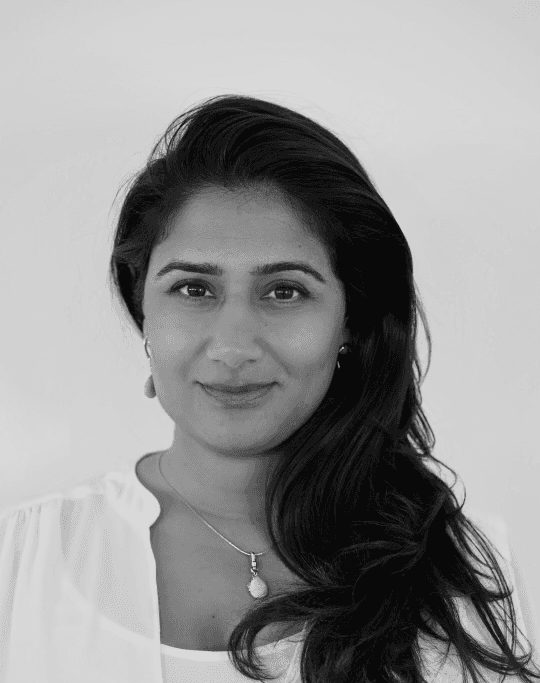
Samira Sohail

Samira Sohail
I completed the Hoffman Process in August 2025 in California, supported in part by a scholarship that I was honoured and deeply grateful to receive.
I completed the Hoffman Process in August 2025 in California, supported in part by a scholarship that I was honoured and deeply grateful to receive.
This was just before moving back to London after almost a decade across the Atlantic, a chapter of my life shaped by reinvention, adventure, and the kind of growth that comes from building a life almost out of thin air. And while London is where I was born and educated, returning after so many years away felt less like going back and more like arriving as a new version of myself. Hoffman became the bridge between those worlds.

In many ways, the Process helped me adjust a lens I didn’t realise had drifted out of focus.
My life itself hadn’t changed: the work, the pace, the responsibilities, the people. But suddenly everything came into sharper, truer relief. I began to see the architecture beneath my patterns: inherited loyalties, over-responsibility, the subtle ways I moved with strength when softness was what I needed, with output when what I actually craved was care.
That clarity didn’t arrive dramatically. It was quiet. Steady. Like finally recognising the contours of a familiar landscape after years of moving quickly across it.
One pattern I now recognise much earlier is my reflex toward over-responsibility. It’s a shape that formed early: a tendency to stay composed, capable, and ahead of the moment, often by absorbing more than was ever asked of me.
For a long time, this looked like strength. I anticipated needs, held emotional weight, and moved forward without visible strain. Hoffman helped me see how automatic this had become, and how it sometimes replaced care with competence.
What’s changed isn’t the disappearance of that instinct, but my relationship to it. When it arises now, I can pause and ask a different question: Is this mine to carry? Often, the answer is no. That pause creates space for a softer response. Instead of stepping in immediately, I stay present. I allow uncertainty. I let others meet me rather than managing the moment for them. It’s a subtle shift, but it has altered how I relate to myself and to those closest to me.
Three things, in particular, have stayed with me since the Process.
A clearer understanding of my emotional inheritance
As a third-culture woman shaped by British, Indian, Pakistani, and spiritual lineages, and by years of living like a local across the globe, resilience has long been my default setting. Hoffman helped me distinguish between what I consciously chose and what I quietly inherited. It gave me permission to loosen my grip on patterns that were protective once, but no longer necessary, and to release weight that was never mine to carry.
A softer relationship with my emotional self
For years, across continents and careers, I felt lucky in life. I built an awe-inspiring existence filled with movement, opportunity, and growth. Hoffman softened that stance. It helped me listen to the younger parts of myself with patience rather than pressure, and to understand that boundaries can be both firm and tender. That care no longer feels indulgent; it feels foundational.
A new way of relating, rooted in presence rather than performance
Much of my professional and personal life was shaped by competence and steadiness. Hoffman invited a different orientation. One where I express needs clearly, allow support without guilt, and choose honesty over habit. The shift is quiet, but it has changed the quality of my relationships in meaningful ways.
What’s shifted since returning to London isn’t immediately visible from the outside. But internally, a great deal has re-patterned.
Before Hoffman, many of my decisions were guided by survival strategies that once served me well. I learned to scan environments carefully, to read emotional cues early, and to rely on preparation and momentum as forms of safety. I trusted being ready more than being receptive. These strategies helped me build a full, successful life, but they also kept me slightly ahead of myself.
Now, instinct shows up differently. It’s less cognitive and more embodied. I notice it as a felt sense rather than a plan, as a slowing rather than a push. Where I once gathered more information, I now check inward. Where I once moved quickly to resolve discomfort, I can stay with it long enough to understand what it’s asking of me. I still act with clarity, but that clarity now comes from alignment rather than urgency.
I recognise patterns earlier and choose differently.
I repair faster, with myself and with others.
I move through conflict with less armour.
I return to myself more quickly when I drift.
I trust intuition more than old survival strategies.
Coming home has felt more grounded, more intentional, and more aligned because of this work.
Although I completed my Process in the US, Hoffman has never felt bound by geography. Since returning to London, I’ve become increasingly aware of the strength of the wider Hoffman community: a shared language, set of tools, and way of relating that travels with us wherever we land. Even before moving back, I found myself drawing on resources and voices connected to the UK, and that continuity has made this transition feel supported rather than abrupt.
I’m sharing this because integration isn’t a solitary act.
Because it helps to walk with people who understand this language and vocabulary.
Because every story shared deepens someone else’s journey.
And because knowing there are Hoffman circles and alumni around the world makes the world itself feel more like home, wherever we land.
I’m grateful to be part of this community, to learn from you, to grow alongside you, and to bring the truest parts of myself into this next chapter of life in London.
A resource that supported my integration
A resource that supported my integration
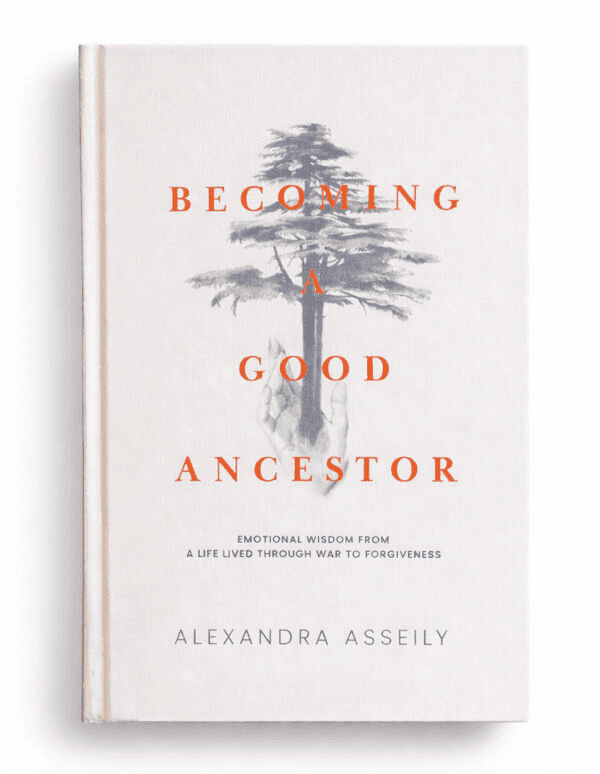
I now work at Zulu Group, founded by Alexander Asseily, a venture studio creating products and stories for human, social, and planetary renewal. One of the most meaningful projects our studio has nurtured is a book called Becoming a Good Ancestor, written by his mother and close collaborator, Alexandra Asseily.
The book was also shaped by the contributions of Matthew Pruen, who was a deeply respected member of the Hoffman UK teaching team before his passing in 2025. Knowing his influence is woven into its pages added a layer of resonance for me. Encountering his voice there felt like a quiet continuation of the work, a reminder that care, wisdom, and presence live on through the people and teachings that shape us.
Becoming a Good Ancestor is a gentle exploration of lineage, forgiveness, emotional inheritance, and the kind of grace that sits at the heart of Hoffman’s work. I found it particularly resonant as I integrated my Process and prepared to root myself again in London. I share it not as a promotion, but as a resource.
Hoffman helped me understand the inheritance I carry.
Becoming a Good Ancestor helps me reflect on the one I hope to leave.
Thank you to Samira for sharing her story. Members of the Hoffman community are invited to enjoy a 25% discount on Becoming a Good Ancestor, available for worldwide shipping with the discount code: GEESE
This was just before moving back to London after almost a decade across the Atlantic, a chapter of my life shaped by reinvention, adventure, and the kind of growth that comes from building a life almost out of thin air. And while London is where I was born and educated, returning after so many years away felt less like going back and more like arriving as a new version of myself. Hoffman became the bridge between those worlds.
In many ways, the Process helped me adjust a lens I didn’t realise had drifted out of focus.
My life itself hadn’t changed: the work, the pace, the responsibilities, the people. But suddenly everything came into sharper, truer relief. I began to see the architecture beneath my patterns: inherited loyalties, over-responsibility, the subtle ways I moved with strength when softness was what I needed, with output when what I actually craved was care.
That clarity didn’t arrive dramatically. It was quiet. Steady. Like finally recognising the contours of a familiar landscape after years of moving quickly across it.
One pattern I now recognise much earlier is my reflex toward over-responsibility. It’s a shape that formed early: a tendency to stay composed, capable, and ahead of the moment, often by absorbing more than was ever asked of me.
For a long time, this looked like strength. I anticipated needs, held emotional weight, and moved forward without visible strain. Hoffman helped me see how automatic this had become, and how it sometimes replaced care with competence.
What’s changed isn’t the disappearance of that instinct, but my relationship to it. When it arises now, I can pause and ask a different question: Is this mine to carry? Often, the answer is no. That pause creates space for a softer response. Instead of stepping in immediately, I stay present. I allow uncertainty. I let others meet me rather than managing the moment for them. It’s a subtle shift, but it has altered how I relate to myself and to those closest to me.
Three things, in particular, have stayed with me since the Process.
A clearer understanding of my emotional inheritance
As a third-culture woman shaped by British, Indian, Pakistani, and spiritual lineages, and by years of living like a local across the globe, resilience has long been my default setting. Hoffman helped me distinguish between what I consciously chose and what I quietly inherited. It gave me permission to loosen my grip on patterns that were protective once, but no longer necessary, and to release weight that was never mine to carry.
A softer relationship with my emotional self
For years, across continents and careers, I felt lucky in life. I built an awe-inspiring existence filled with movement, opportunity, and growth. Hoffman softened that stance. It helped me listen to the younger parts of myself with patience rather than pressure, and to understand that boundaries can be both firm and tender. That care no longer feels indulgent; it feels foundational.
A new way of relating, rooted in presence rather than performance
Much of my professional and personal life was shaped by competence and steadiness. Hoffman invited a different orientation. One where I express needs clearly, allow support without guilt, and choose honesty over habit. The shift is quiet, but it has changed the quality of my relationships in meaningful ways.
What’s shifted since returning to London isn’t immediately visible from the outside. But internally, a great deal has re-patterned.
Before Hoffman, many of my decisions were guided by survival strategies that once served me well. I learned to scan environments carefully, to read emotional cues early, and to rely on preparation and momentum as forms of safety. I trusted being ready more than being receptive. These strategies helped me build a full, successful life, but they also kept me slightly ahead of myself.
Now, instinct shows up differently. It’s less cognitive and more embodied. I notice it as a felt sense rather than a plan, as a slowing rather than a push. Where I once gathered more information, I now check inward. Where I once moved quickly to resolve discomfort, I can stay with it long enough to understand what it’s asking of me. I still act with clarity, but that clarity now comes from alignment rather than urgency.
I recognise patterns earlier and choose differently.
I repair faster, with myself and with others.
I move through conflict with less armour.
I return to myself more quickly when I drift.
I trust intuition more than old survival strategies.
Coming home has felt more grounded, more intentional, and more aligned because of this work.
Although I completed my Process in the US, Hoffman has never felt bound by geography. Since returning to London, I’ve become increasingly aware of the strength of the wider Hoffman community: a shared language, set of tools, and way of relating that travels with us wherever we land. Even before moving back, I found myself drawing on resources and voices connected to the UK, and that continuity has made this transition feel supported rather than abrupt.
I’m sharing this because integration isn’t a solitary act.
Because it helps to walk with people who understand this language and vocabulary.
Because every story shared deepens someone else’s journey.
And because knowing there are Hoffman circles and alumni around the world makes the world itself feel more like home, wherever we land.
I’m grateful to be part of this community, to learn from you, to grow alongside you, and to bring the truest parts of myself into this next chapter of life in London.
A resource that supported my integration
I now work at Zulu Group, founded by Alexander Asseily, a venture studio creating products and stories for human, social, and planetary renewal. One of the most meaningful projects our studio has nurtured is a book called Becoming a Good Ancestor, written by his mother and close collaborator, Alexandra Asseily.
The book was also shaped by the contributions of Matthew Pruen, who was a deeply respected member of the Hoffman UK teaching team before his passing in 2025. Knowing his influence is woven into its pages added a layer of resonance for me. Encountering his voice there felt like a quiet continuation of the work, a reminder that care, wisdom, and presence live on through the people and teachings that shape us.
Becoming a Good Ancestor is a gentle exploration of lineage, forgiveness, emotional inheritance, and the kind of grace that sits at the heart of Hoffman’s work. I found it particularly resonant as I integrated my Process and prepared to root myself again in London. I share it not as a promotion, but as a resource.
Hoffman helped me understand the inheritance I carry.
Becoming a Good Ancestor helps me reflect on the one I hope to leave.
Thank you to Samira for sharing her story. Members of the Hoffman community are invited to enjoy a 25% discount on Becoming a Good Ancestor, available for worldwide shipping with the discount code: GEESE
Emma White
Creative Agency COO
I went into the Process believing I was unlovable. I left knowing that wasn’t true.
Christian Coll
Hotelier & entrepreneur
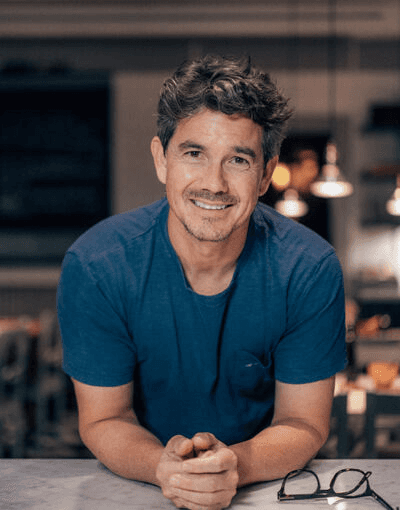
Hoffman did not erase my past, but it reframed it.
Dee Cowburn
Consultant
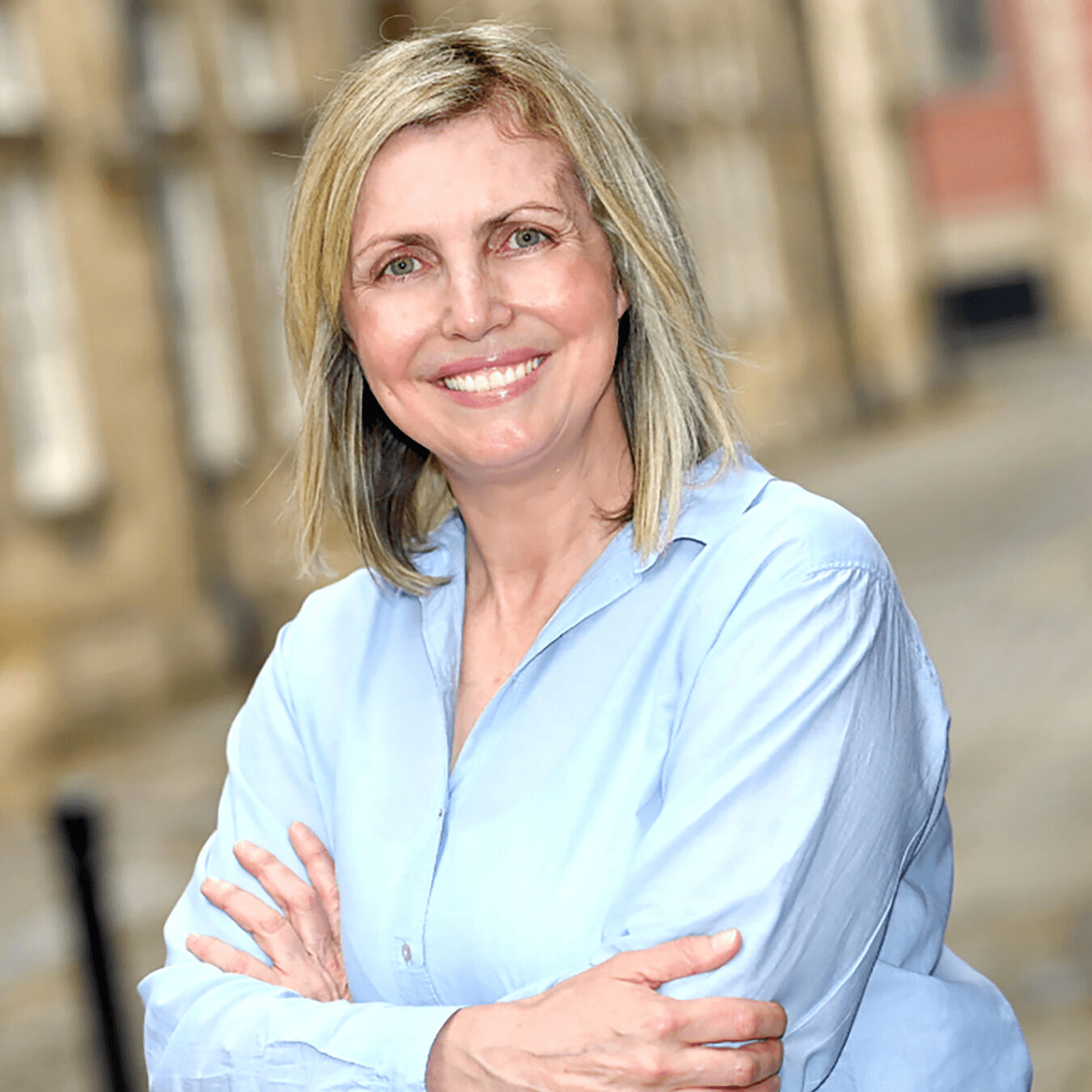
‘Hoffman gave me my feelings back, and the strength to live my life authentically.’